Like any good introvert, I spend a disproportionate amount of time in my head. My thoughts are sometimes practical, but more often than not, I find myself wandering down a rabbit hole for the sheer joy of it. One of my favorite games to play is to assume the role of an alien who has landed on a new planet (Earth) and marvel at the strangeness of it all. What a strange world where the sky is blue, and people walk on two legs with their eyes locked on computers. It’s all bizarre if you start to think about it. And in that logic, I find myself questioning it all - what would life be like if the sky were green, we could fly like birds, and cities were built in the likeness of another animal instead of humans?
And then taking one step deeper, what would life be like if we could live forever? We are in the age of biohacking, of reducing inches and increasing years. Every day, there seems to be a new method or technique, but to what end? It’s perhaps a morbid thought experiment, but at what cost would you want to extend your life, and what does it look like to live longer? Is life worth living if you can no longer physically move how you want to? If you can no longer see or hear? Is it worth it if you no longer have a community around you to support you? If everyone you ever knew or loved has long gone? How would you change if you lived for 100 years? For 200 years? For 1,000 years? Would you live the same life or multiple lives? At what point is a reset a biological necessity? And what does it mean to reset and be born again?
I often ponder this question, using science fiction books as my guide. In a world where we all live forever, how does society change? In worlds like those in Peter Hamilton’s space operas, where life can be extended through rebirth, how do people navigate their first, second, or third lives? Predictably, we start with hedonism in our youth, only to gain wisdom with time and experience.
In that first life, nature runs at a set progression. There is a cycle and flow to things: school, first jobs, settling down, raising children, passing the torch to the next generation. There is comfort in this rhythm, a kind of beauty in its predictability. But, for me, this narrative has always felt somewhat suffocating. It’s as though moving through these stages is akin to inching closer to death. One of my mentors once told me, "Never hire a dead person," which struck me deeply. What does it mean to be "dead" in life? To be so tethered to routine and expectation that you can map out your eventual demise?
As we extend the limits of our lifespans, how will our stories evolve? Does the plot stretch endlessly, with each chapter occupying more time? Or are there necessary scene changes, intermissions, and new characters to keep the story fresh? Is there a point where we simply can’t persist as the same version of ourselves, where a reset isn’t just healthy—it’s essential?
The idea of an identity reset isn’t new. It’s a video game reset. An alternative persona online. LARPing - if you’re into that sort of thing. I love costume parties because they are an opportunity to be someone else, something new, for a set time. The same mindset applies to moving cities, changing jobs, ending relationships, cutting your hair, and shifting friend groups - they are tactical and mechanical ways of altering your identity and persona. External identity shifts, if you will. They serve the purpose of novelty and change, but they are not always lasting. They’re a quick fix that often resembles running away rather than running toward a truer version of oneself.
But what if the real reset happens internally? Perhaps it doesn't require a grand gesture. Maybe it’s quiet, intimate—a recalibration of your internal compass. A decision about how you want to show up in your life and for the people you love. It is how you wish to look back at the stories that define you and the future you wish to create. It is the reset of your internal compass to a new true north.
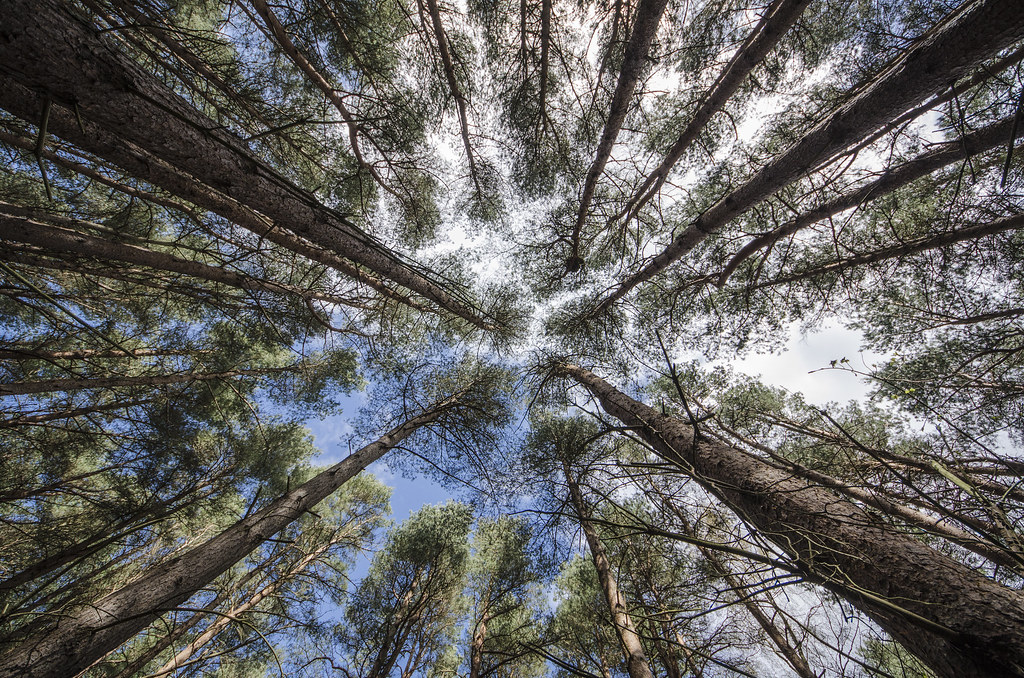
I went for a hike in the redwoods today after coming back from Burning Man. Amid the playa and the tree grove, I found reminders to reset. I found reminders of impermanence. I found reminders that I could let go of and burn everything that no longer served me to transform it into fuel to support my growth.
On the spectrum of a belief in woo, I am solidly woo-curious - I retain a healthy skepticism, but I always want to hear my horoscope. I have always been - without a doubt - a creature in flight. In the world of Primal Astrology, the combination of Western and Eastern Astrology, I am a Goose. “In the animal kingdom, there are primarily two categories of geese: wild and domesticated. Wild geese go where they want when they want, while domesticated geese lay far more eggs and guard them more ferociously. In the Primal Zodiac, those born under the sign of the Goose have both sides blended into one.” I have been a wild goose all my life - fiercely independent, always on the go, always searching for change - but lately, I’ve been drawn to a quieter existence. Certainty isn’t the enemy. Stillness isn’t weakness—it’s strength. I no longer need to do it all alone. I can be taken care of. I can shift my compass toward a more grounded, true version of myself. I can reset.
Ultimately, this rabbit hole on longevity and rebirth lead to a more profound question: What does it mean to live a life well-lived? In behavioral economics, the peak-end rule suggests that we remember experiences based on their most intense moments—the peaks and valleys—and how they end. The length of the experience matters less than its emotional highlights. Thus, in this line of thought, longevity allows for more resets and opportunities to start anew and create new peaks. A life well-lived is a life of many lives.
And as I go deeper in my internal monologue, I’m reminded of a quote by Alan Watts:
“Let's suppose that you were able every night to dream any dream that you wanted to dream. And that you could, for example, have the power within one night to dream 75 years of time. Or any length of time you wanted to have. And you would, naturally as you began on this adventure of dreams, you would fufill all your wishes. You would have every kind of pleasure you could conceive. And after several nights of 75 years of total pleasure each, you would say "Well, that was pretty great." But now let's have a surprise. Let's have a dream which isn't under control. Where something is gonna happen to me that I don't know what it's going to be. And you would dig that and come out of that and say "Wow, that was a close shave, wasn't it?" And then you would get more and more adventurous, and you would make further and further out gambles as to what you would dream. And finally, you would dream where you are now. You would dream the dream of living the life that you are actually living today.”
Perhaps the key to a life well-lived isn’t in how long it lasts, but in how often we allow ourselves to reset, to wake from one dream and step boldly into the next.