What to say when there's nothing you can say
I need to tell you something. I don’t know what to say.
I am not dying, I refuse to believe I am dying, I am holding out every hope for a miracle, every shred of optimism that a next-generation therapy could salvage my life. I cling to that light with every ounce of my being. Yet, in that space, I have to be realistic. I have to face the blood in my stool and see my body crumble from the inside out. I have to recognize my odds of making it another year or two, let alone five, are statistically low. That even if my scans come back clean in less than two weeks, the chance of a recurrence, of a life interrupted again, is high. That my world right now is one of uncertainty and unknowns.
And in that impossibly dark space, comes the tumbling litany of common cancer sayings, “ You’re strong,” “You can beat this,” “You’re a fighter,” all things I believe to be true, but I shield everyone from my deepest fears. Someone asks me how treatment is going, and I say it’s going well. I don’t say that I have no clue. I don’t say that I’m scared. I don’t say that I’m doing everything right, but I don’t know if that’s enough.
If survival is a matter of will, then dying becomes a failure. But this is the language we have.
Few people know what to say to a cancer patient, and the same could be true of anyone living through a before and an after, be it chronic illness, a miscarriage, or a loss of a loved one. It’s a particular subset of problems, the unfixable type. In a world where almost everything can be solved by some combination of grit, determination, and optimism, for these problems, the usual calculus does not apply.
Why is it so fundamentally difficult to know what to say when there is nothing you can do to fix the problem?
Why is it so hard on the other side to share your truth?
Clinging to a logical mind like a life raft, I revert to game theory. The majority of problems in life can be seen as fixable. The optimal outcome for both sides, a person in need and a caretaker, is to take action. If you’re hungry, someone feeds you. If you are in pain, someone finds medicine. These are coordination games where signaling a need and responding with solutions creates the highest mutual payoff. Conditional hope - if we do x, the future will get better - is rewarded by the world itself.
Then a tectonic shift occurs. There are parts of existence that cannot be bargained with. Tatiana Schlossberg has a terminal leukemia diagnosis at the age of 35. She did everything right. She “had swum a mile in the pool the day before, nine months pregnant… regularly ran five to ten miles.” She was “actually one of the healthiest people [she knew].” Same , I wanted to scream as I read her words in the New Yorker, same. Life is just life in all of its randomness.
In this moment of free fall, the caring person leans harder into what has always worked for them, the maintenance of a worldview where input matches output. The person in need hides their dark truth away. For them, there is no future where they will live forever, where they will bring their loved one back from the dead, or where they can go back into time. No one can do anything to change this. The logic of conditional hope does not apply.
This is the Nash Equilibrium of suffering: two players stuck in a stable but suboptimal pattern due to incomplete information about the other side. Each makes a rational choice within the limits of what they believe. Each optimizes against their fear.
The way out asks something terrifying of both sides. The caregiver must risk feeling useless. The patient must risk feeling fully seen. Only then does the equilibrium shift, one not grounded in the erasure of uncertainty, but in the willingness to share it.
What do you say to someone who is going to die? What do you say to someone who doesn’t know?
There is nothing you can say that will solve it. But, there is much you can say that will keep someone company inside of it. You say: I’m not going anywhere. You say: You don’t have to be strong with me. You say: I don’t know what to say, but I’m here. You let there be silence. You keep showing up after the crisis fades and everyone else moves on.
Hope doesn’t disappear, but it shifts. Instead of hope for a guaranteed outcome, I hope for dignity. For moments of beauty. For pain to be held, not hidden. For not walking into the dark alone. When reality cannot be changed, hope’s job is not to fix the future, but protect the present. Conditional hope shifts to unconditional presence.
I’ve now realized that this was always the case. I just didn’t see it before. That the unfixable world is not just one inhabited by the sick, but the truest version of the world that exists. Pema Chödrön wrote that “nothing ever goes away until it has taught us what we need to know.” The unfixable keeps returning, in illness, in loss, in grief, until we stop running. Until we open instead of close.
The world may not get better. My cancer may not go away. But who is to say this life isn’t beautiful? Camus wrote it plainly, “But what does it mean, the plague? It’s life, that’s all.” And in the darkest depths of my sadness, my white-knuckled plea to live, I realize it is not a detour from living, but living itself.
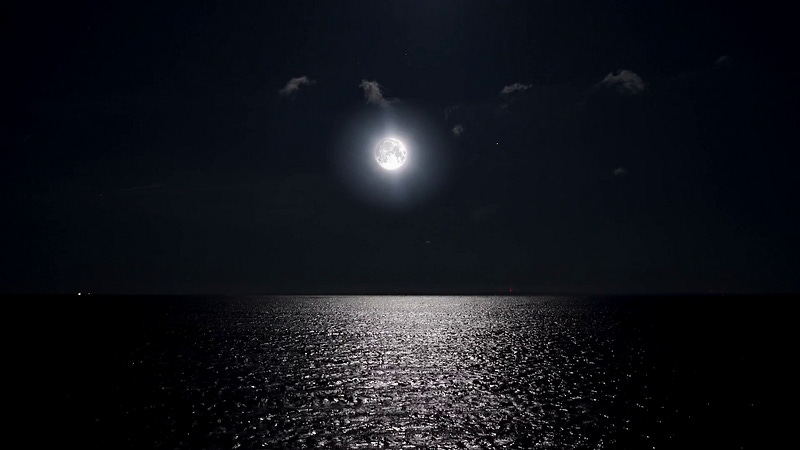
I write this from flight, traveling from country to country in search of a cure, in search of solace. As I look out the window, I see the moon at eye level above the clouds. From here, I can see that dying and living were never opposites. They were always the same thing, happening at once.
I would love it if you shared my words with anyone you think would benefit from them. It means a lot to me to feel like I have a voice.
Thank you, as always, for your support. It means the world to me that you’re reading and sharing my work.
This is Part I. I will share a practical guide with my best tips on navigating cancer treatment in a few days as Part II.
* If you have specific questions you’d like me to address in this, drop them in the comments <3