On collapse, creation, and healing from a poem a day
“To see a World in a Grain of Sand / And a Heaven in a Wild Flower, / Hold Infinity in the palm of your hand / And Eternity in an hour.” - William Blake
I am exhausted. Worn down to my bones. My scans came back not clean, but stable, that strange purgatory of continuation. In this space between rounds, between the certainty of chemo coursing through my veins and the unknowing of what’s next, I am collapsing. I have collapsed.
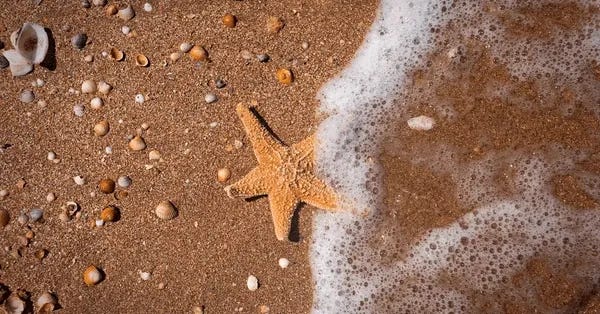
We speak so little about the after, the survivorship, the recovery. Everyone hears the crash, the diagnosis, but as the wave slowly dissolves to the shore, I am but a starfish washed up on the sand, unsure of my grounding and my place in the world.
This moment brings me back to my time as a rower, specifically, the hours between championship races, where we as a team would fall down on the dirty convention room cloaked in artificial darkness, faces pressed down on the 1980s-style grey carpet, thirsty for sleep, muscles pulsing with the sharp burn of lactic acid. You can only exert yourself as hard as the inverse of how much you can relax. __ My Whoop band judges my aliveness, my years left to live, based on my heart rate variability, and I think about how that principle can be applied across all facets of life. We worship the work and the exertion, but we forget how none of that is possible without stillness, without rest, without recovery. Without darkness, there is no light. Or, as Gibran says in one of my favorite poems, “the depth of your sorrow is the extent of your joy.”
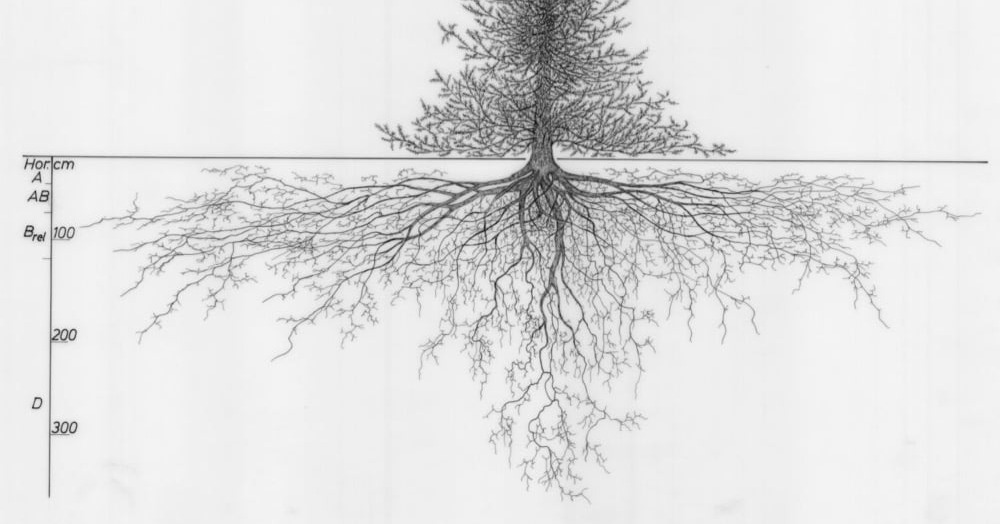
The most beautiful things in life hold that contradiction, that paradox. The daily dying of the sun splashed across the sky, the transience of clouds, the spiral of a leaf fluttering to earth. Suffering and beauty, threaded through each other like roots.
As I lay on the grass, listening to the sound of waves beating against the shore, trying to let the earth hold my broken body, a dear friend - someone I met through our mutual cancer trials and tribulations and bonded with through a shared passion for life - sent me the translation of a poem that brought me to tears:
_Meadows so vast, mountains so high.
In the place of flowers, there was such a smell of grass.
Life is not empty.
There is kindness.
There are apples.
There is faith.
Yes, as long as there are poppies, one must live.
In my heart, there is something
like a grove of light,
like the sleep of the early morning.
And I am so restless
that my heart wants
to run to the end of the meadow,
Go to the top of the mountain.
In the distance there is a voice
that is calling me._
I urge you to listen to it being spoken aloud in Persian, hear the contradiction between the meadow and the mountains, the space in between.
One of the greatest regrets of my life is not speaking more languages. I’ve written about it before, that tug between seeing things as they are and naming. I saw God several years ago during a psychedelic experience, and I realized how much of art, writing, and creation is our attempt to express the divine. The bright light of the holy, that unbearable luminosity, cracked into pieces, into languages, into colors, into stories, into reverberating echoes. I found myself the next morning wanting to collect those shards like sea glass, hoping I could look through them like a kaleidoscope and catch the light again.
My favorite word in the world is Komorebi. It encapsulates the experience of light reflected through the stained-glass of tree leaves in a forest. The original chapel. But so much of religion and the world has drifted away from that immediacy. In translating the divine, we’ve dulled it. It’s a fear I have with AI, as Ted Chiang put it, the “blurry JPEG of the world”. As we move to understand more, will we end up knowing less?
But there’s a difference between AI that paraphrases and AI that opens doors.
My mom does Duolingo every morning, and I love her for it, but I don’t want that. To speak another language is not to translate, it is to taste. I want to bite into each word like a plum and let the juices drip down my chin.
In the time when my life is most uncertain, I am overwhelmed by a fierce desire to learn and create, this force flowing through every facet of my being. And I am delighted, giddy rather, that in the age of AI, the barriers to entry in every medium have reduced. I can be a vessel for whatever wants to come through, dissolving the old limitations of fear and skill, shortening the path between dreaming and making. Facing my mortality has revealed how much of my life I spent curating myself into smallness, making excuses, and deferring joy. Living now has become my spiritual practice, my rebellion. If a door opens, I walk through it. If a poem calls my name, I follow it.
I don’t know what’s next. Cancer made visible what was always true, that none of us do. But there’s liberty in that.
So this is all to say, in my deep desire to completely relax, to sink further into my human existence, I built myself a web app.
It’s called Lingua Poetica.
It’s a place to learn languages through poetry, hearing the divine in its mother tongue. I’ve begun with Persian, Spanish, and German and am slowly expanding into others. It’s early in its formation, built for no ambition beyond my wanting it to exist. But I wanted to share it as I’m going, so we can learn a poem a day together over morning coffee.
As you learn languages, your poetry garden grows. You learn by hearing, understanding (the translation but also the philosophical meaning and poem analysis), and speaking. It’s working for me, I hope it does for you.
My friend told me that in Persian, the word for God is Khoda—خدا. It comes from two words: Khod and aa. It means “come to oneself,” or “find yourself.”
I hope Lingua Poetica holds you as it’s holding me, that you can lie back in the waves of Neruda, Goethe, and Rumi and find yourself, one word at a time.
Thank you, as always, for reading and for the support. It means the world! As always, please share and feel free to reach out. I would love to hear feedback!
And join us in the chat - I’d love to hear if anyone has any favorite poems!