Absence becomes essence
I lost my hair a couple of days ago. While baldness is somewhat of a cancer cliché within popular media, only 30-40% of cancer patients experience significant hair loss. It’s somewhat ironic for me; this spring, when I was the closest to death I’ve ever been, I physically fit in the realm of normal. Now, I am the healthiest physically, mentally, and spiritually I’ve ever been, despite having Stage IV cancer, yet I wear the marks.
I thought I was prepared. I had watched the strands thin, knew what was coming. But there is no preparing for the shock of waking up to a clump of yourself on the pillow, or of brushing your hair and finding your hand full of what used to crown you. It’s not just unsettling, it is ontological, shifting the sense of what you are. For months, I have carried my optimism like a shield, my conviction that one day I would look back and say this was the best thing that ever happened to me. Yet as my hair fell out, so did that foundation. Something more essential was exposed.
Hair is never just hair. It has always carried meaning, representing fertility, beauty, and a sense of belonging. In every myth, the body becomes a stage on which the collective works out its fear of loss and change. I think of Samson, undone at the root of his power. How fragile we become when the symbols of strength are cut away. Simone de Beauvoir wrote that “representation of the world, like the world itself, is the work of men; they describe it from their point of view, which they confuse with the absolute truth.” Hair has long been part of that absolute, the shorthand of femininity and desirability. To lose it is to fall outside of what is legible.
Standing in the bathroom, clawing at my scalp, I kept thinking how much of our identity is costume. In theater, a character is defined not only by words but by what she wears, by the color that ties her to or separates her from others on the stage. In life, we are no different. Hannah Arendt argued that to appear is to exist in the human world. What happens, then, when the codes of appearance are stripped away?
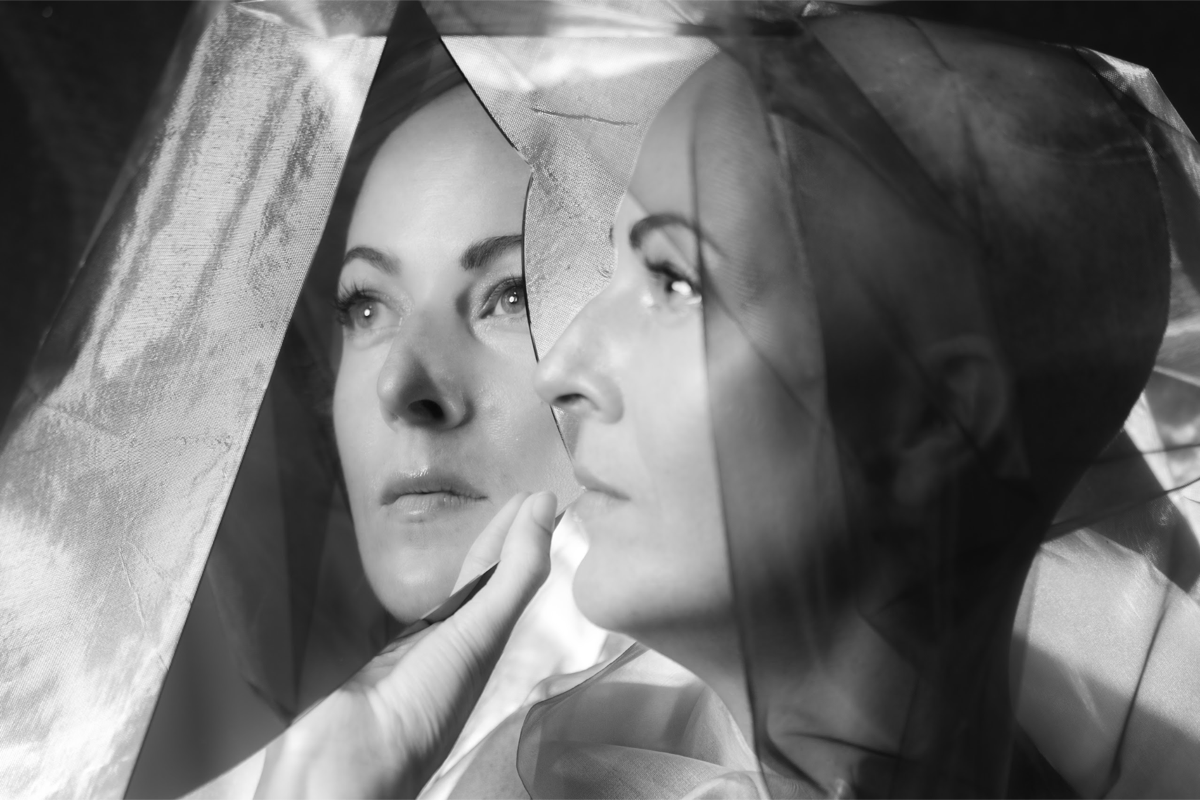
Cancer does this systematically, shifting every point of definition, of how you define yourself in the world, and how, recursively, the world defines you back. It is the stripping away of all of the costumes until you are forced to meet yourself without disguise. It removes the mirrors that tell you who you’re supposed to be. And when the mirrors are gone, you begin to ask questions that are at once terrifying and liberating. Who am I when there is no reflection to confirm me? Who am I when the world’s signals fall silent? And perhaps the scariest question of all: what parts of me need to die for me to live? David Whyte calls this the fierce invitation of life, the moment life refuses your disguises.
The obvious answer to baldness is wigs, but even that reveals its own hollowness. Unbeknownst to me previously, there are three primary consumers in the United States: costume apparel, Black women, and certain communities within Orthodox Judaism. Cancer patients are a market, but a fleeting and temporary one. Costume wigs are made of acrylic and are functional for an evening, but not for long-term wear. The joy of wearing a purple wig vanished in the face of physical discomfort. In the latter two, human hair is often used, and, given that wigs are priced by the ounce, an unnatural abundance of hair is a status signal in itself. As such, it took a surprising amount of work to find a natural one, and as I did, I found myself pushed back into a sense of the uncanny. The eye can tell when something is not natural, when someone has had too much work done, when something isn’t quite right. I didn’t know what was worse, baldness or disguise.
Alex Jodorowsky wrote, “A bird in a cage thinks flying is a disease.”. Inside this cage, baldness looks like sickness, exile from the flock. But as I stepped outside of it, baldness became freedom. I lost all semblance of caring what others thought when I lost my final strands. Like the shedding of an old skin, a forced return to essence. Or, in the words of Rilke, “Why not be transformed into fire?”
“You’ve been hiding your face your entire life,” said my hairdresser as he cut away my last locks. He meant it superficially, but I took it philosophically.
What does it mean to hide a face? And inversely, what does it mean to be fully known, to be fully seen, to leave the cage behind and find the freedom of the sky?
I lost my ability to be anyone. To blend in. But somewhere in there, in a way I have a hard time articulating, it no longer matters. I can no longer be anyone because now I have a self to claim.
PS. Thank you for all your well wishes and support. It means so much to have this outlet, and I’m grateful for everyone who has shared and held my words. Tomorrow is another chemo infusion day. I welcome all prayers as I take one step closer to finishing this cycle (two rounds left) and continue down the longer path of part-time treatment in Germany.