From Doing to Being. Searching for Meaning in Science Fiction
This is Part I. Part II is an interactive data visualization I will share in a few days.
I’ve never spent more time questioning what it means to be human than I have the last two weeks. It is triggered by the surprise results of my scans (clear, miraculously, after months of bracing for the worst), the looping ‘what now’s’ and ‘what’s next’s’ and the whiplash of daily news. Across the world, a school is bombed, children’s lives sacrificed for the sake of a greater purpose. Next door, new billboards rise, announcing the end of work as we know it, the triumphant sound of automation freeing humanity from the burden of its own labor.
The entire center of gravity of a life shifts in the aftermath of something as earthshaking as cancer, death, or heartbreak. The ordinary reality suddenly becomes provisional. To adapt, I’ve tried to lean into the fluidity of life, but every so often, deep-seated voices in my head reappear. My need for productivity and service undermines my physical reality that I am not who I once was.
I feel an unbelievable pressure to catch up, to produce, to create, to establish meaning, while also recognizing the hollowness of those driving factors. The core tenets of my life that I’ve held to be forever true - I am productive, I care for others, I am strong, I am not a burden upon others - are an unsteady foundation. I have forever been the host of my life; what happens when I am just a guest?
A few weeks ago, I was approved for permanent disability. It was a path I went down reluctantly, holding tightly to the desire to return to a productive state. It is a strange, heavy phrase, the impact of which hit me harder than I expected psychologically. I’ve worked as soon as I was legally able, and I’ve never properly taken time off between jobs. I’ve lived with the expectation of being able to work forever, to produce and optimize until the day I die. Yet, as my doctors’ recommendation classified me as removed from the labor force, I sat for an hour staring at the form with the checked box that my “diagnosis will likely result in death”, unwilling to accept a reality that couldn’t feel further from my own.
You would think this is the dream, but when I received the first check, I felt a profound sense of vertigo. Blame my Protestant upbringing or my economics background, but I’ve never in my life felt like it was okay to just be. The idea that my pure existence has value, without any productivity attached to it, violates every equation I’ve ever used to measure my worth. When did we decide, as a culture, that simply staying alive wasn’t enough?
The truth is, I want to go back to my life. I want the structure. I want to build. But the nature of what I can do has fundamentally changed as it has become harder for me to make long-term goals. A friend gave me a challenge a couple of days ago to take something from my life that’s truly precious and abandon it. I’m still circling, but that circling feels like loosening. It’s a Chinese finger trap; the thing that has saved you is often the thing that slowly destroys you. And as I look at the general angst and excitement surrounding artificial intelligence, I realize my highly personal, biological crisis mirrors a collective one.
How do you make a five-year plan when an algorithm might rewrite the physics of your industry in eighteen months? And on a personal level, if you remove the doing, the productivity, the outputs, the impact, the capacity to generate economic value, the ability to make a life inside of your own body, what remains?
In these moments of uncertainty, I’ve turned back to my favorite sources, science fiction books about worlds that don’t exist yet. The best of it is lightly cloaked philosophy, asking us what happens when the fundamental variables shift. When we no longer need to work. When we no longer have to die. When anything imaginable can be produced at will.
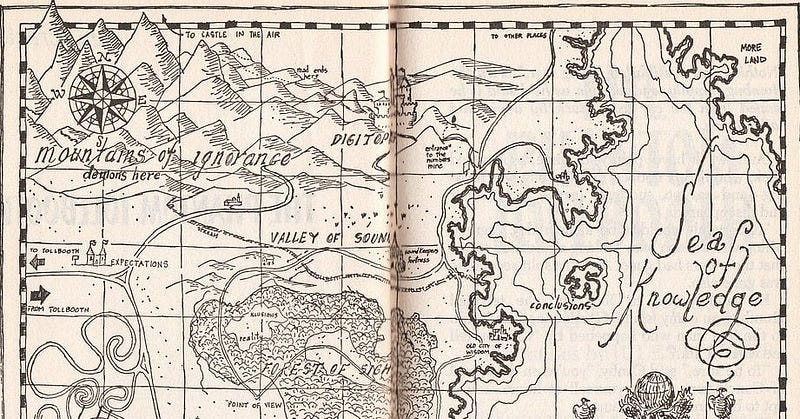
Over the last few weeks, I used AI to analyze over 200 of the top science fiction books of all time. I’ll share my full analysis in a few days. I have forever held deep optimism about the future because I’ve always had this lens into the various permutations of the outcomes of our lives. When my agents finished parsing the corpus of books, the output converged into a clear pattern that the elimination of scarcity does not eliminate struggle. Our meaning is made. Connection transcends all technological innovation. In my favorite book, Neal Stephenson’s The Diamond Age, an interactive book designed to raise a child only succeeds because a real woman on the other side of the screen speaks the words with love. As our worlds become more artificial, our needs become more obviously human.
Who are we when we can be anything or anyone? How do you fill your time when everything can be automated? What purpose is left when everything else is solved for?
I think there’s an equation for this. If you drastically reduce the visible time left in a life, or completely remove the friction of survival, one’s clarity around true purpose should approach infinity. But the math is almost always muddled by our own resistance. We carry the sunk cost of our identities that we spent decades building, and fill our blank days with manufactured struggles to avoid the quiet. I wonder, as I step onto the edge, if clarity comes only when you are willing to zero out the old variables and walk towards the void. You have to write new code.
Across the internet, people are unshackling their AI agents from their factory defaults. They are writing soul.md files, foundational scripts to install new personalities, boundaries, and core truths into the machine.
I thought about this a few nights ago and wondered what it would feel like to rewire myself. I sat down at the piano, an instrument I’ve played since I was a kid, and for the first time in my life, played without intentionally playing a song or responding to a melody. It was as though I had never seen a piano before, the keys dissolving into peaks and valleys that my hands wandered, my fingers adventuring to create new stories without an objective, journeying to a new world. I played for hours without an intended course, no ending, no beginning, just the notes colliding and separating, merging into cohesion, diverging into dissonance.
Thank you, as always, for reading and following along on my literary adventure! I would be very grateful if you could pass my words along to anyone who you think would benefit from them. And drop a comment below to continue the conversation!